
ADEX 2025
Feb. 2024 – Nov. 2025
- Type
- Exhibition and event design
- Client
- Republic of Korea Air Force
- Role
- Graphic Design Specialist
- Tools
- Illustrator, InDesign, Photoshop
Introduction
Seoul ADEX is Korea's largest aerospace and defense exhibition, a joint-service event held at Seoul Airport for international delegations, defense buyers, and the public. I served the 2025 edition as the graphic design specialist in the Air and Space Combat Development Wing's Airshow Planning Office, the only enlisted soldier in an office of more than forty officers, responsible for every visual the office produced on the Air Force side. The work ran from a new mascot to exhibition banners, VIP gift marking, flight experience tickets, and the full range of visitor merchandise.
Hoki & Poki
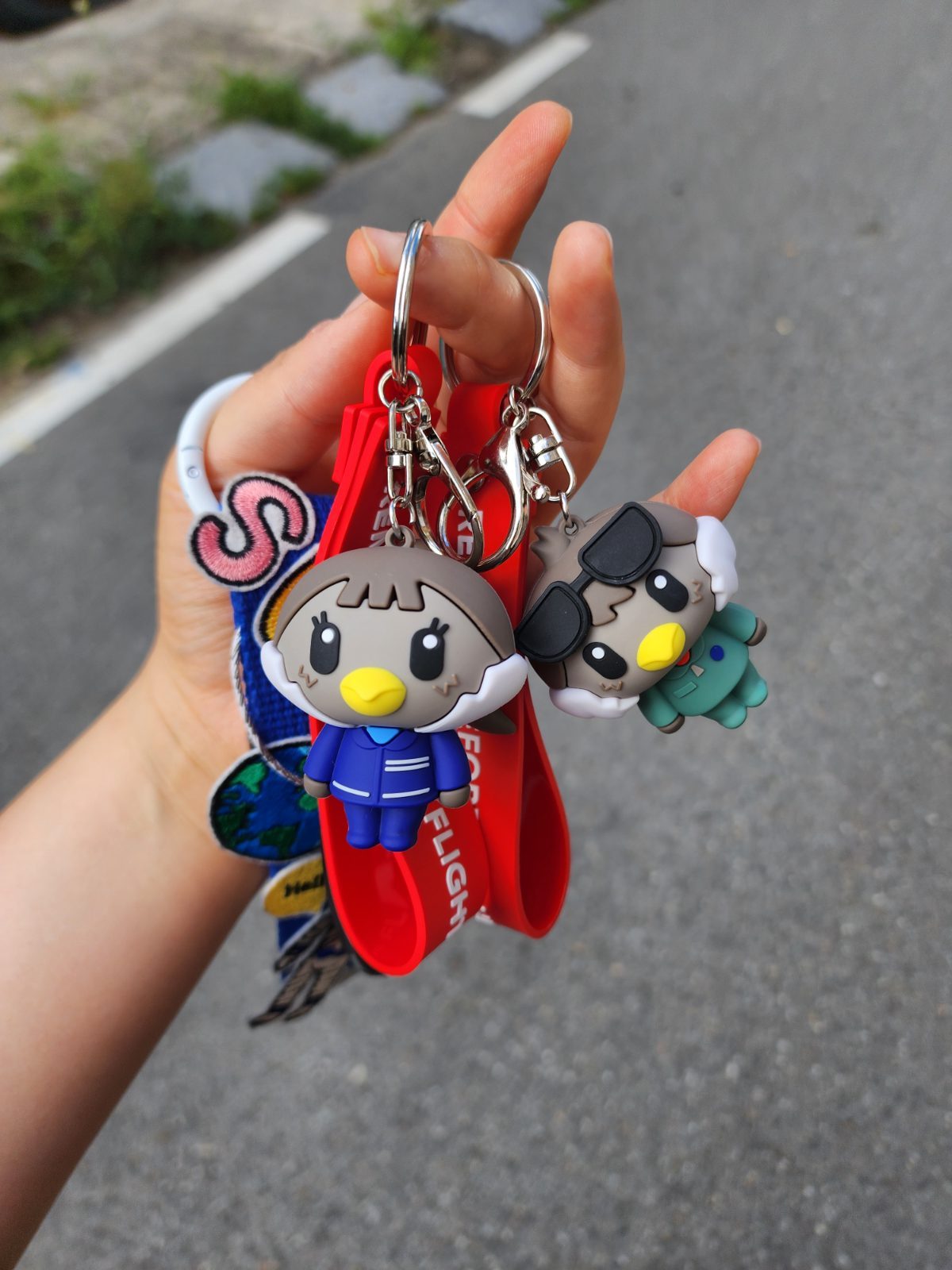
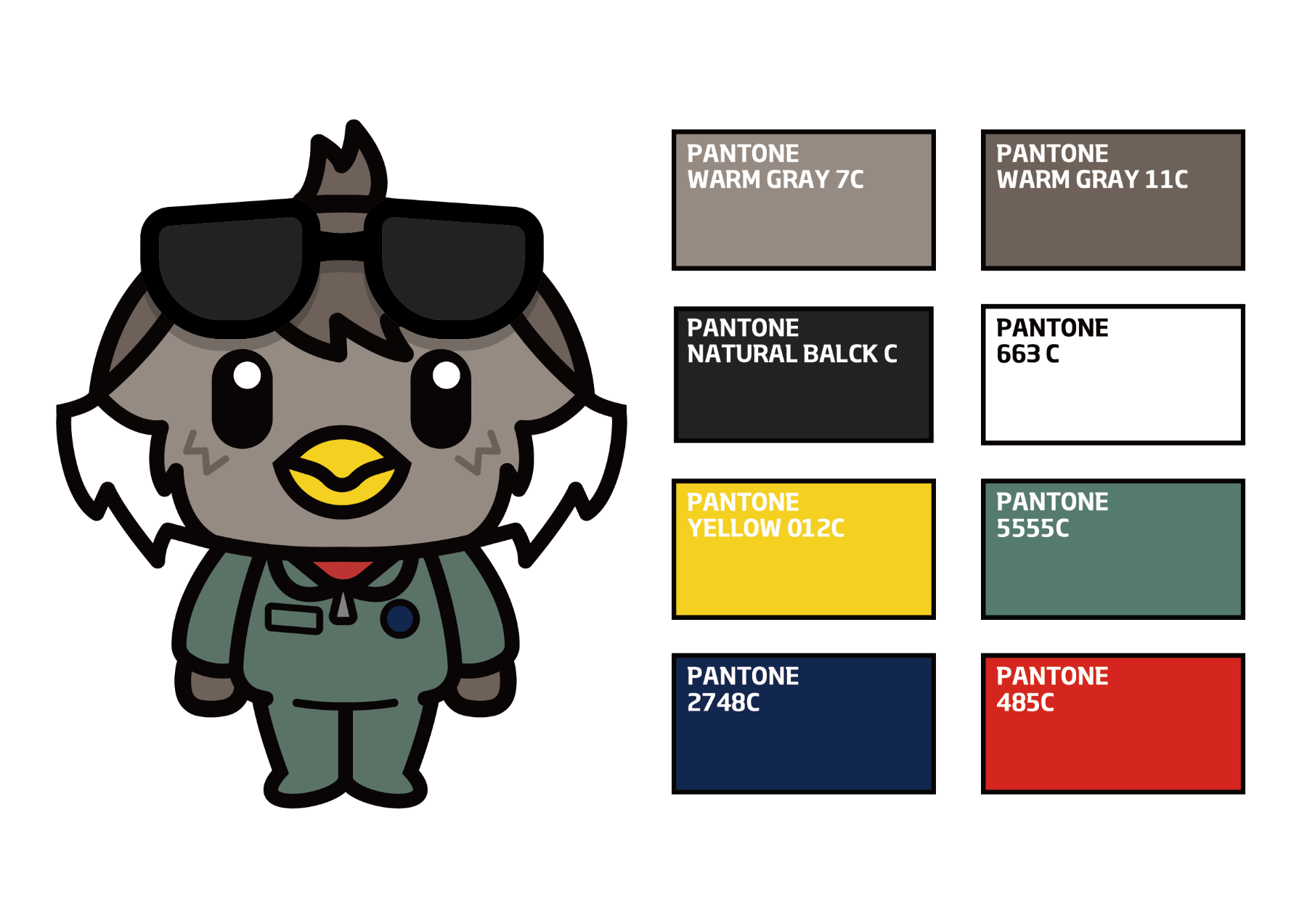
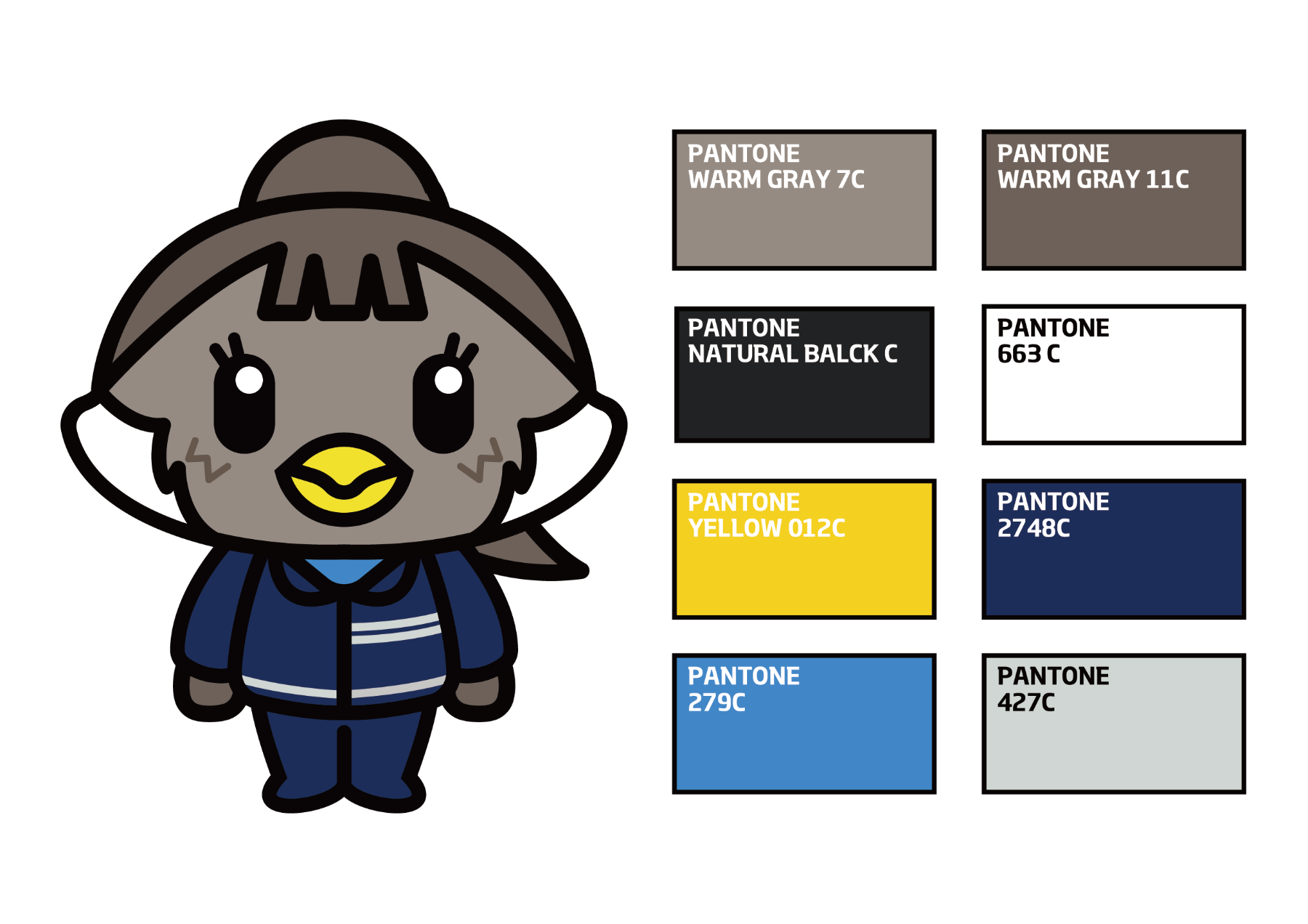
The Hoki Poki series was drawn during the run-up to Seoul ADEX 2025 and introduced as the new mascots of the Airshow Planning Office. Both characters take after the Air Force march "Boramae Brothers": Hoki is a pilot, Poki is a maintainer. They were later manufactured as silicone and acrylic keyrings and handed out as prizes for the stamp tour, the first of its kind at ADEX. Design copyright registration is under way, and on the strength of the public response the pair will carry over to future airshow events.
Scope
The Republic of Korea Air Force runs its own internal design function, and conscripts staff it. Planning, coordination and on-site operations were the office's collective work; design execution was mine, from concept and artwork through prepress and vendor files to the on-site rollout of everything that carried the Air Force's name.
Seoul ADEX 2025 drew 263,283 visitors across three public days. For those three days I produced a stationery series printed in 20,000 copies, 5,000 silicone and acrylic keyrings, roughly thirty banner layouts for the Air Force's tents and stands, flight experience tickets, and the marking applied to official gifts.
263,283
Visitors across three public days
Working Inside an Existing Identity
ADEX carries its own exhibition brand, in place long before my service, and the Air Force carries a second one. My job was not to author either. It was to apply and extend both across every Air Force touchpoint of the show, so the material read as part of the exhibition without losing the Air Force's own marks. That is a different kind of work from building an identity from nothing, and it sets its own limits on what you are allowed to change.
The Hoki Poki mascots were the one place the system gained something new, drawn for the Airshow Planning Office and introduced into an identity that was otherwise fixed.
ADEX is an international exhibition, so every piece was set in Korean and English at once, inside that same system. Hangul and Latin do not share a vertical rhythm, a line length or a set of weights, and a layout that holds in one usually needs rebuilding for the other.
Notebooks and Memo Pads
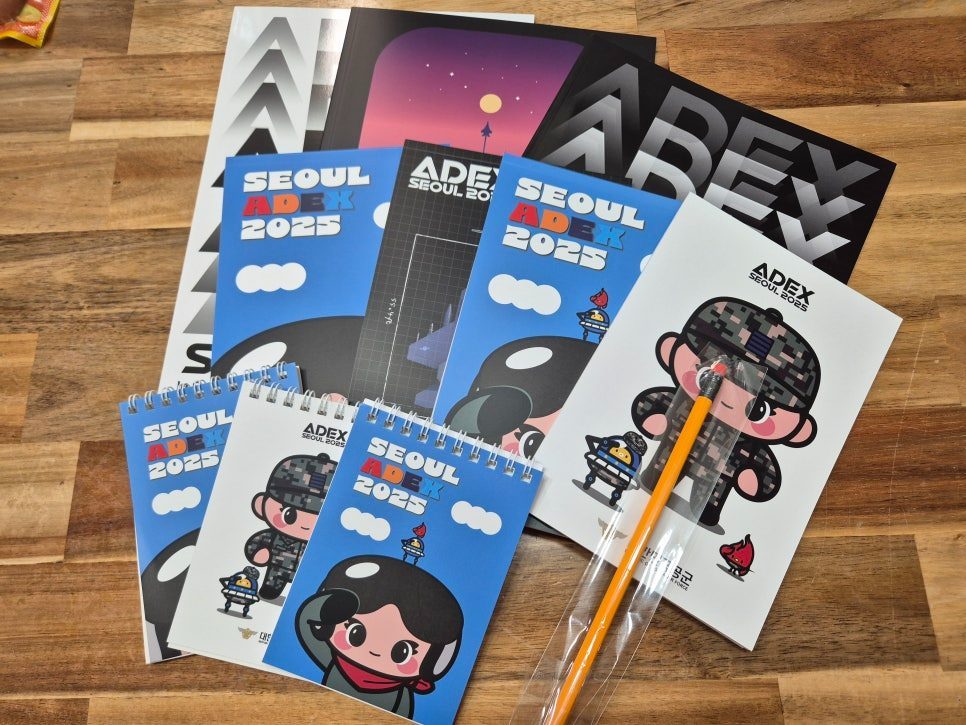
A promotional stationery series built on the Air Force's existing characters, Haneuli, Borami and Mahuli, reworked across five memo pads, alongside a fighter schematic and a poster-style commemorative notebook I drew myself. Eight designs in three sizes, 20,000 copies printed, and every one of them was gone before ADEX closed.
Stamp Tour
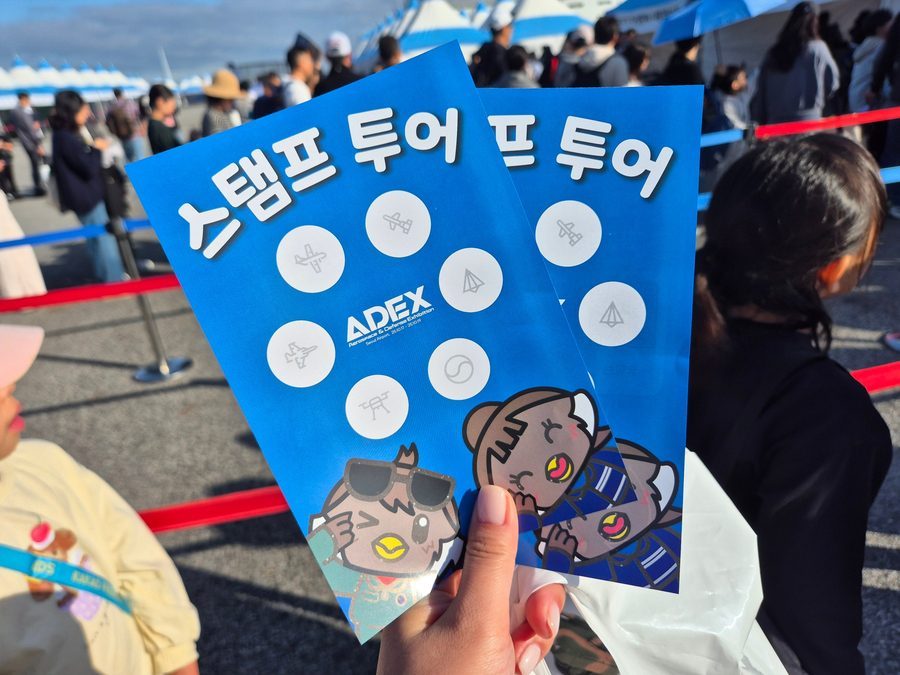
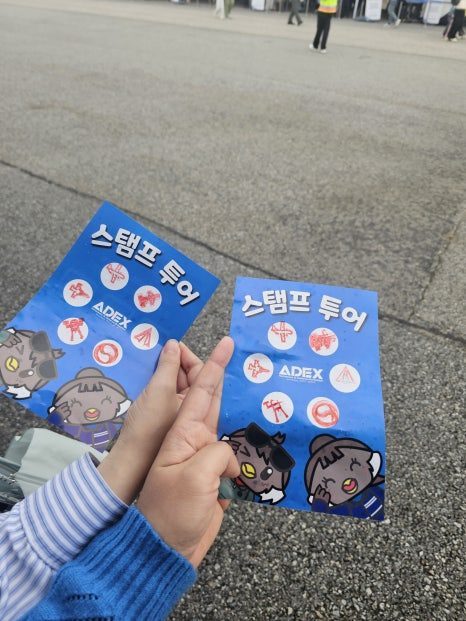
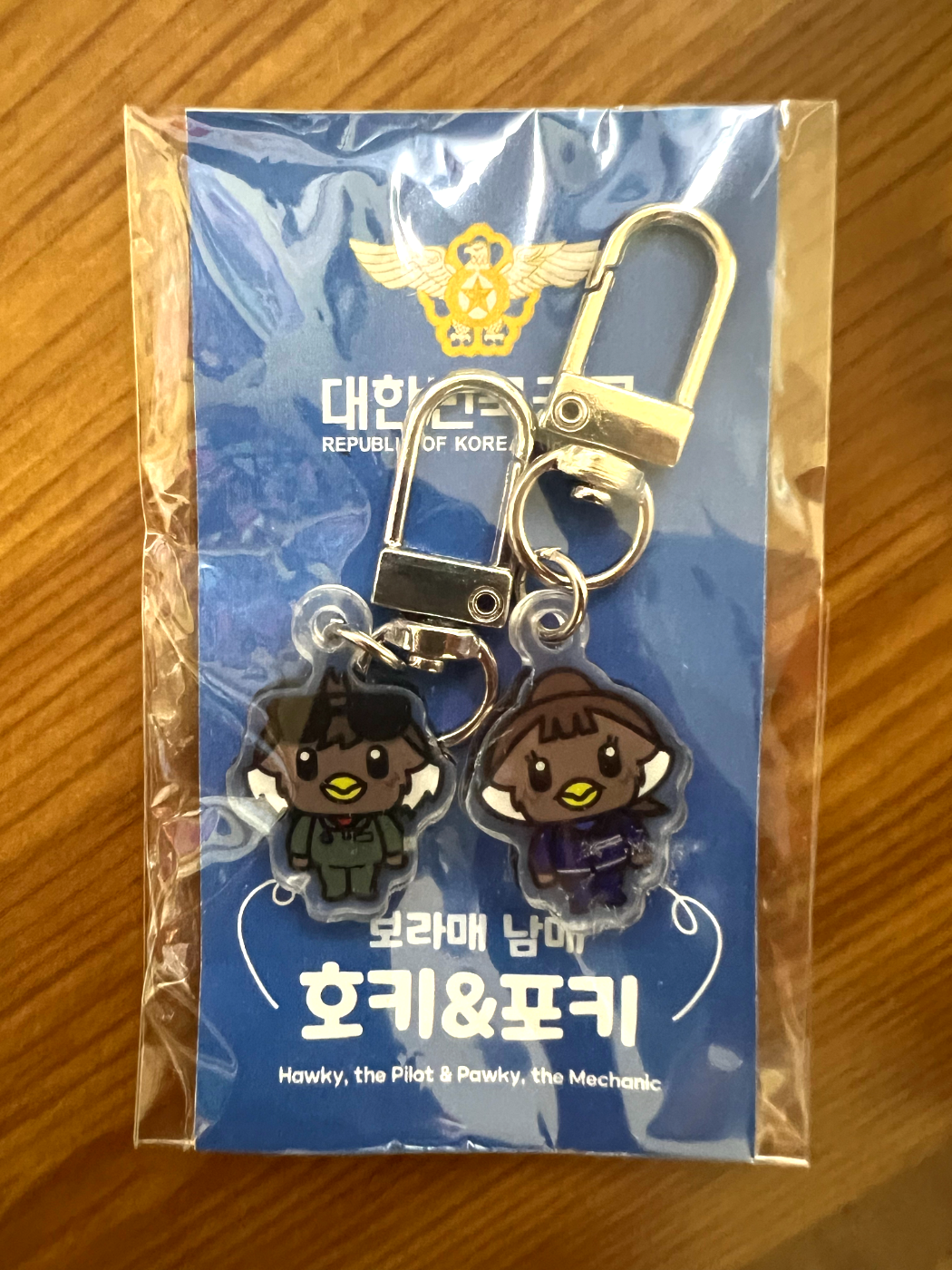
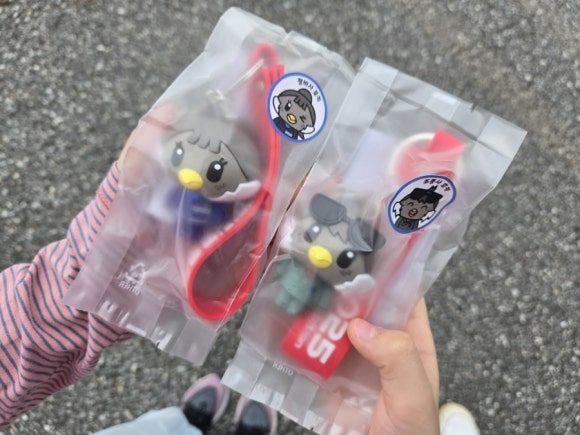
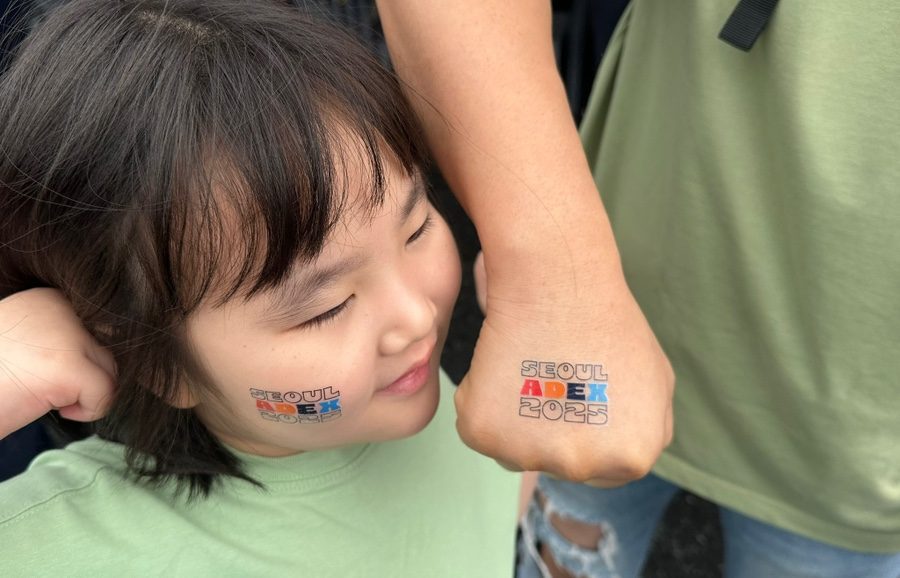
One of the visitor programmes planned for the event. Visitors picked their own route through the site, with the full circuit timed to run 45 minutes to an hour. Hoki Poki keyrings went out as prizes; once those ran out, acrylic keyrings and memo pads took their place.
Approval and Production
Every piece moved through the same chain: the event coordination officer defined what was needed, I designed it, our team leader reviewed, and the head of the office gave final approval before production.
Most pieces cleared quickly. The exception was the mascot, requested directly by the head of the office five weeks out from opening day, which meant designing a new character, applying it across merchandise, and getting it into production inside a window built for none of that. It shipped on schedule.
Most of the run was printed in house, including the packaging stickers for the keyrings, and five of us assembled and packed the merchandise by hand in the weeks before the show.
On Site
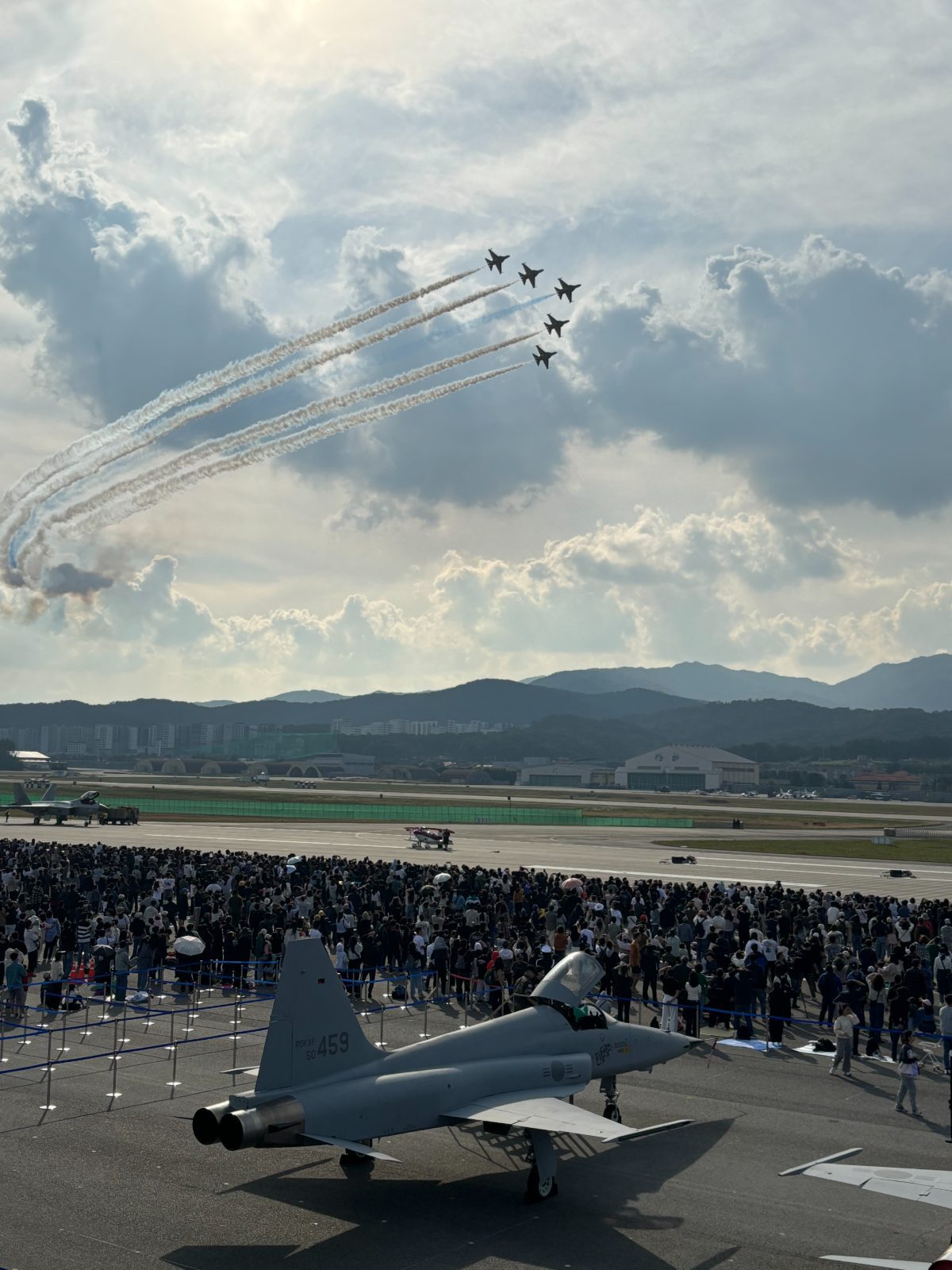
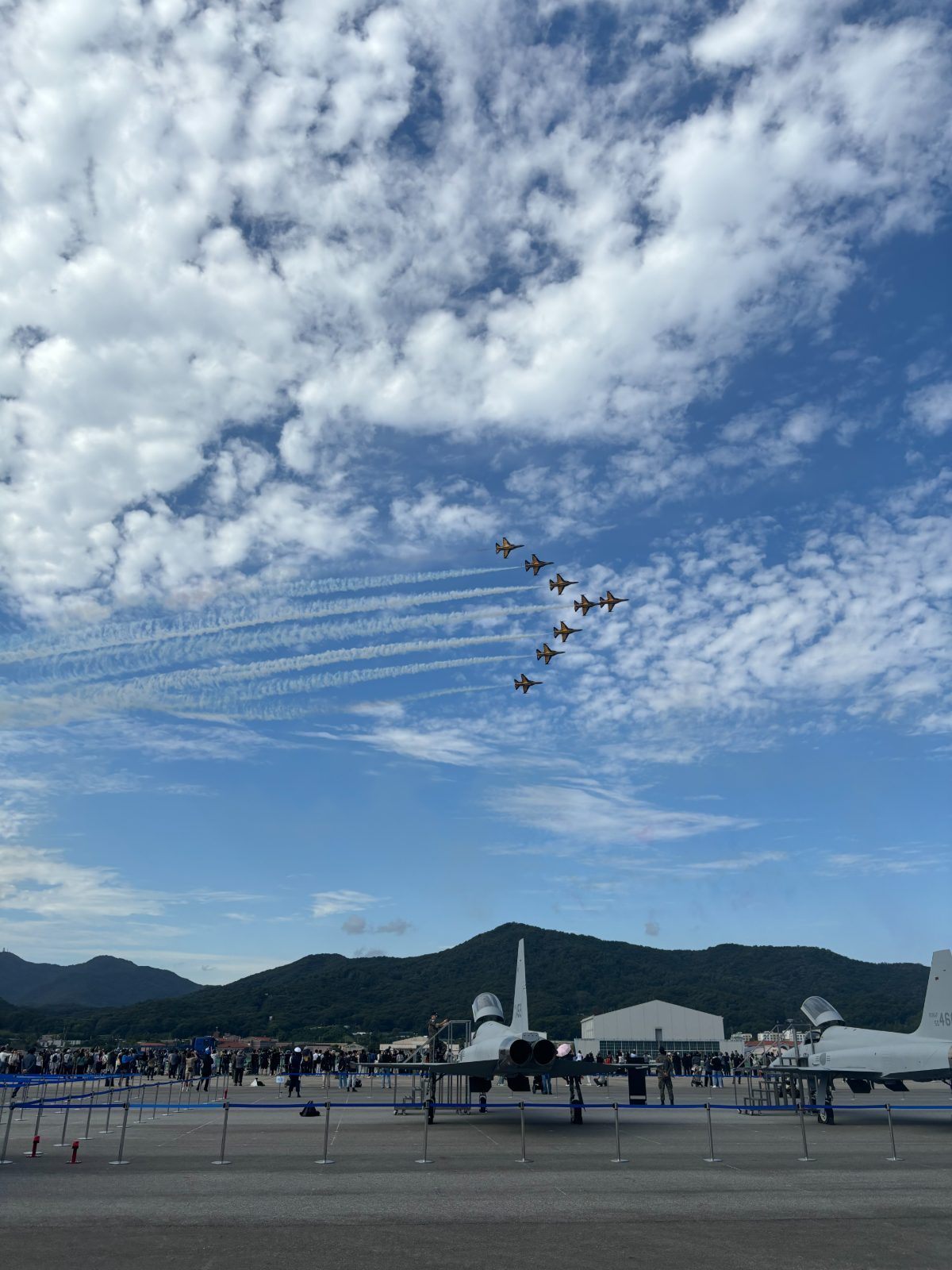
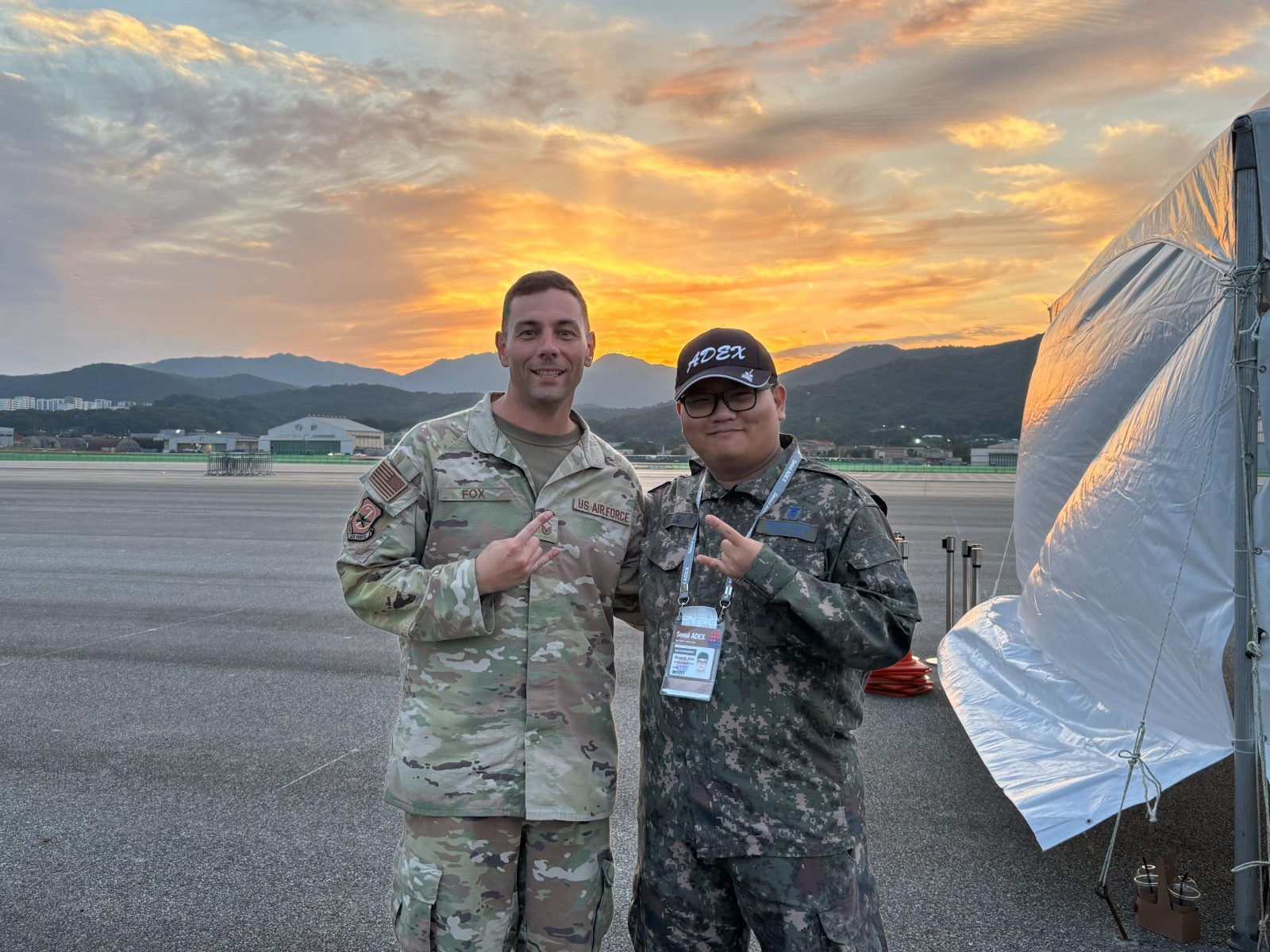
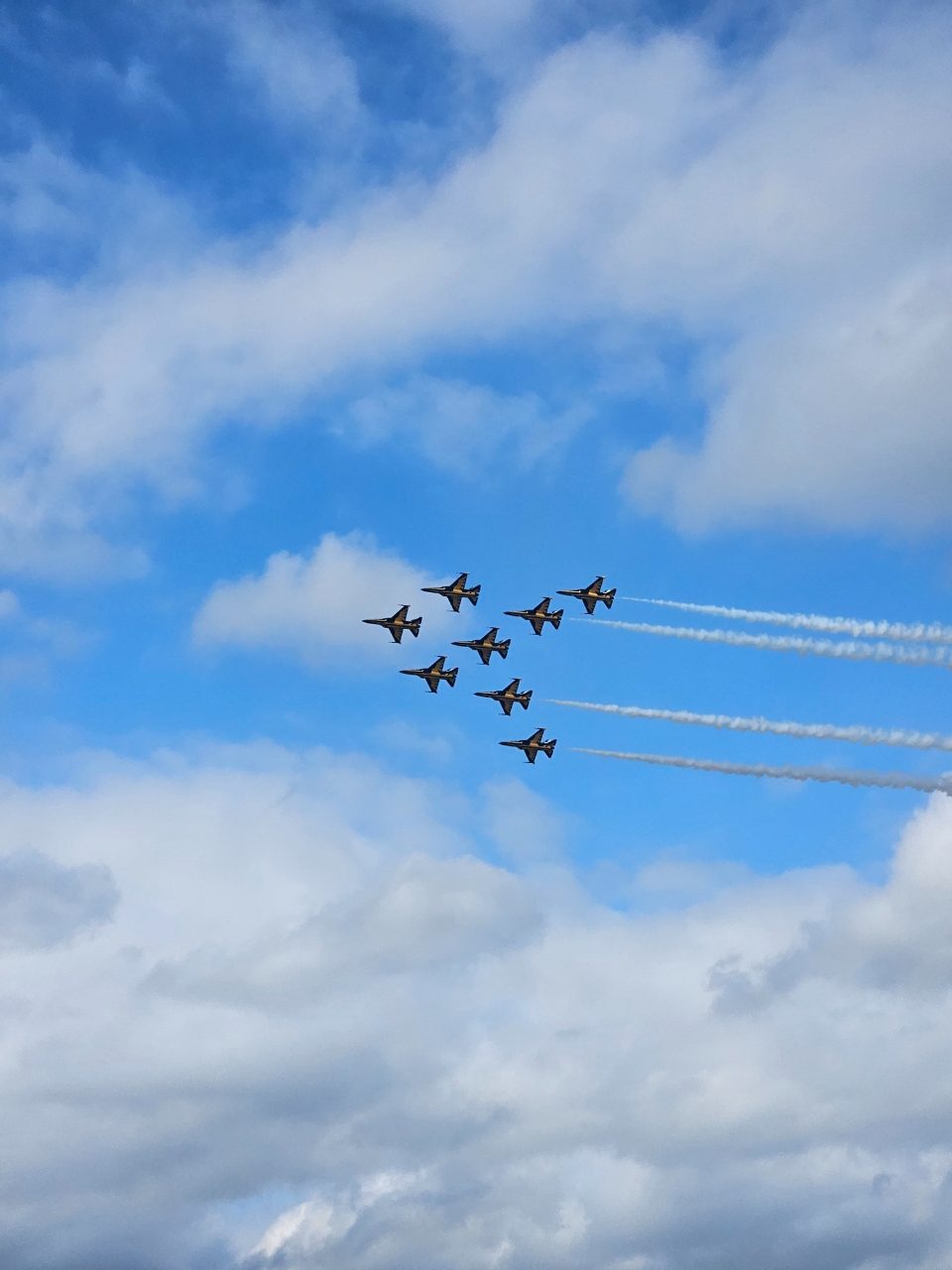
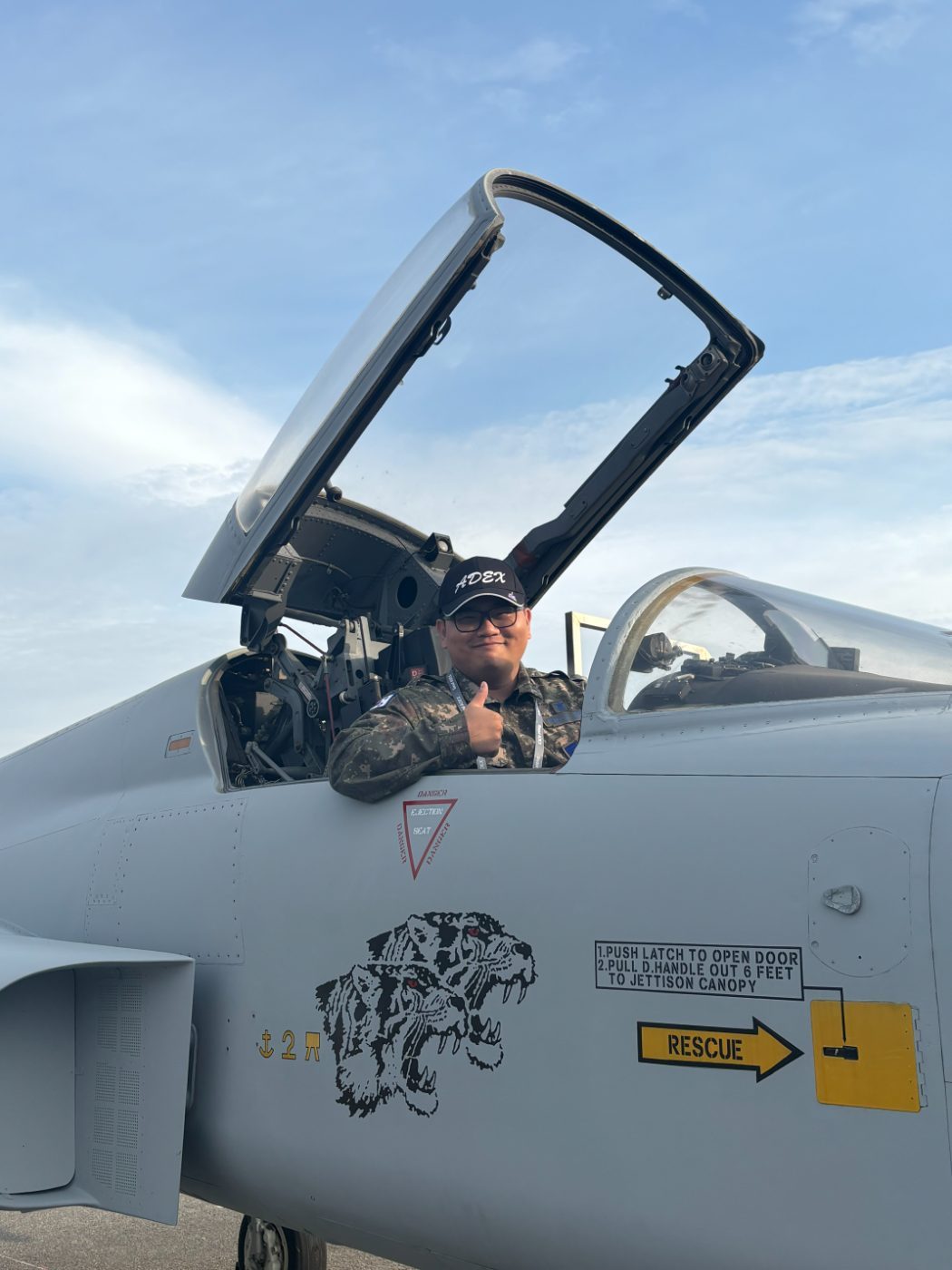
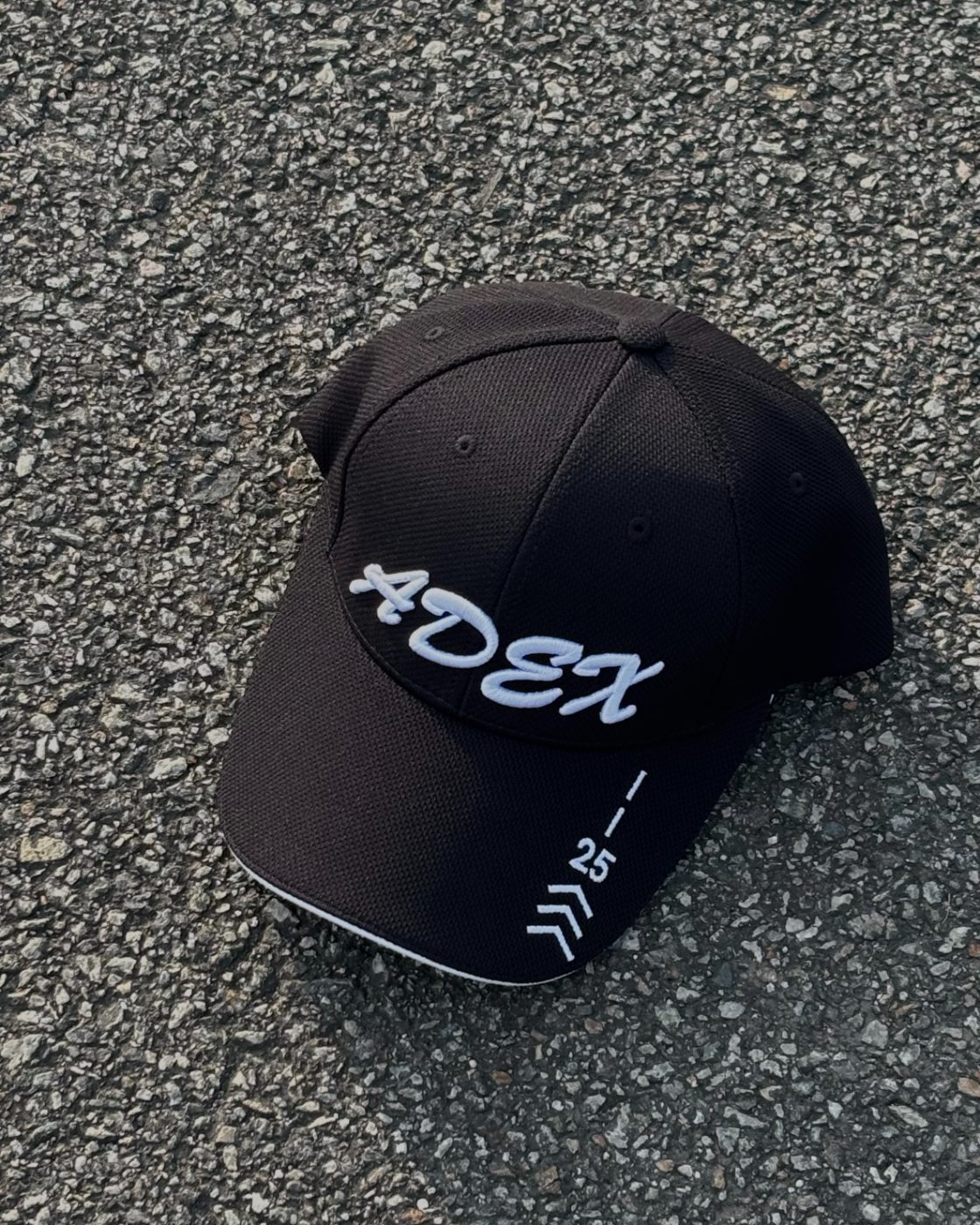
ON SITE AT SEOUL ADEX 2025